Home / Custom Countertops Asheville Shops Build One Slab at a Time
What Custom Countertops in Asheville Actually Involve
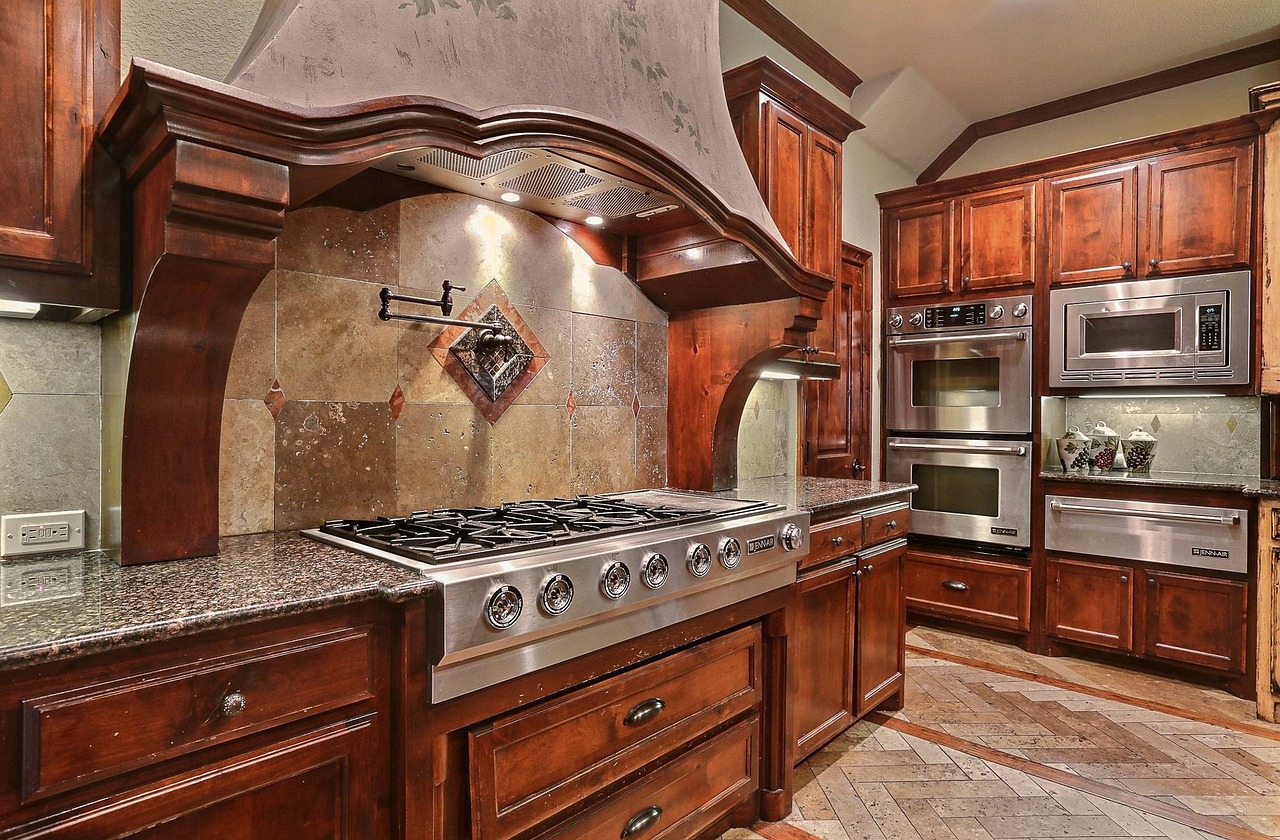
The word custom gets used loosely in the countertop trade. A big box order with a choice of three edge profiles is still a catalogue product. A genuinely custom top starts at a specific slab, on a specific rack, in a specific yard, and every decision after that point is made against the material actually in front of you rather than a sample chip. That difference is what most homeowners are really asking about when they call around for pricing.
It matters more in this region than it does in a flat suburban market. Kitchens here span 1920s bungalows in Montford, mid century ranches in Haw Creek, and new builds out toward Arden and Fletcher, and almost none of them have square walls or level cabinet runs. A shop that fabricates to the room rather than to a drawing absorbs that. A shop that cuts to a plan and expects the room to cooperate produces the gaps that get blamed on the installer later.
It starts at the slab, not the sample
Natural stone is not a uniform product. Two granite slabs cut from the same block will share a general character and still differ in veining, background tone, and the position of any fissures. Quartzite is worse in this respect, or better depending on your taste, because the movement can shift dramatically across a single slab. Engineered stone, the quartz category that includes brands like Cambria and Caesarstone, is far more consistent by design, which is exactly why some people choose it and others find it flat.
Selecting in person means standing in front of the actual slab and deciding where the interesting part of it should land. On a large island, that is a real design decision. The most dramatic vein in the slab can run down the centre of the island, sit off to one side, or be cut out entirely by the sink hole if nobody thinks about it. Fabricators who lay out digitally will show you the cut lines overlaid on a photograph of your slab before anything is cut, and that step is the single clearest marker of a custom process.
Across the kitchens that countertop fabricators template in Asheville, the same trade sequence repeats: a slab chosen at the yard rather than from a sample chip, a digital template taken once the base cabinets are level and secured, a mitered edge built up in the shop, and a seam placed behind the undermount sink where the eye will not travel. Where a licensed general contractor is running the wider kitchen remodel, the countertop fabricator coordinates with the cabinet installer and the plumber who reconnects the waste and supply lines, because none of those trades can close out until the stone is down.
Templating is measurement, and it is not optional
A template is a precise record of the actual space. Most shops now use a laser templating system that shoots the perimeter of the cabinet run and produces a digital file accurate to a fraction of a millimetre. Older shops still cut physical templates out of thin plywood or corrugated plastic, which works, is slower, and is arguably more forgiving on badly out of square walls because the templater is physically fitting material into the gap.
Whichever method, the room has to be ready. Base cabinets must be installed, level, and secured. The sink and faucet need to be on site so the cutout and the tap holes match the hardware rather than a generic assumption. Any appliance that sits in the countertop, a cooktop most commonly, needs its spec sheet at minimum and preferably the unit itself. Templating a kitchen that is not ready produces a top that fits a kitchen that does not exist.
The shop work
Once the template is approved, the slab goes to a saw. Larger shops run CNC bridge saws and waterjet cutters, which handle interior cutouts and radiused corners cleanly. A sink cutout on an undermount installation gets polished on its exposed edge because you will see and touch it every day, which is not true of a drop in.
Edge work is where a lot of the custom budget goes. A simple eased edge is close to free. A bullnose or ogee costs more because it is more machine time and more hand polishing. A mitered edge, the detail that makes a thirty millimetre slab look like a hundred millimetre slab, is significantly more work: two pieces are cut at forty five degrees, glued, and the joint is polished out so the veining appears to wrap the corner. Done well it is invisible. Done badly it is the first thing a visitor notices.
Seams, and why the plan matters
Slabs are finite. A run longer than about three metres will have a seam somewhere, and the only question is where. A good fabricator places seams deliberately, usually behind a sink or at an inside corner where the eye does not travel, and matches the veining across the joint so the pattern continues. A poor one places the seam wherever the cut list was most efficient. Seam placement should be discussed before fabrication, not discovered on install day.
Install day
The finished pieces arrive, get dry fit, and adjustments are made on site with a grinder and polishing pads. Shims level the top across cabinet runs that are rarely perfectly level themselves. The seam is filled with colour matched epoxy, clamped, and polished flush. Silicone goes around the perimeter where the top meets the backsplash wall.
Plumbing reconnection is a separate trade in most jobs. Fabricators cut the hole and often set the sink, but connecting the drain and supply lines is plumbing work, and on a permitted remodel it may need to be done by a licensed plumber. Clarify who is doing it before install day rather than discovering at five in the afternoon that nobody booked it.
What to ask before you sign
Ask whether you will select the physical slab or a colour. Ask whether they will show you a digital layout with the cut lines before cutting. Ask where the seams will fall. Ask whether the edge price quoted is the edge you actually want. Ask who reconnects the plumbing and who removes the old top. Those five answers separate a fabrication service from a supply and fit service, and the price difference between them is usually smaller than people expect.
Thickness, and why it changes the look more than the colour
Slabs arrive in two common thicknesses, roughly twenty millimetres and roughly thirty. The thinner one is cheaper and lighter, needs a plywood substrate under it in most applications, and reads as a more contemporary detail. The thicker one is self supporting across normal cabinet spans and reads as more substantial. Neither is better. But a quote that does not state the thickness is not a complete quote, because the same colour in the two thicknesses is a visibly different countertop.
Build up strips are the middle route. A thin slab with a laminated strip along the front edge gives the visual weight of a thick top at a lower material cost. The join is visible on close inspection if the strip is simply glued under the edge, and invisible if it is properly mitered. Ask which one is being quoted, because the words build up cover both.
Sealing, and what it does not do
Most natural stone gets an impregnating sealer, which soaks into the surface pores and slows liquid absorption. It is not a coating and it does not sit on top like a varnish. Granite in normal domestic use typically wants resealing every one to three years depending on the stone and the traffic. Marble and other calcareous stones are more porous and more reactive, and no sealer prevents an acid etch from lemon juice or wine, because etching is a chemical reaction with the stone rather than a stain sitting in it.
Engineered quartz is non porous and is not sealed at all. It is highly stain resistant and it is not heat proof, and the most common damage on a quartz top is a scorch mark from a pan set straight down off the hob. Both categories want a trivet. The difference is which failure mode you get if you forget.
Lead times worth planning around
From signed quote to installed top, three to five weeks is a normal span. Roughly one week of that is getting the templater booked, one to three weeks is fabrication depending on the shop's queue and the complexity of the edge work, and the install itself is a day. Exotic material that has to be sourced rather than pulled from local stock adds to the front of that.
The part that surprises people is that the clock does not start when you choose the stone. It starts when the kitchen is ready to template. Cabinets delayed by two weeks push the countertop by two weeks, and there is nothing the fabricator can do about it, because a template taken against cabinets that are not final is worse than no template at all.