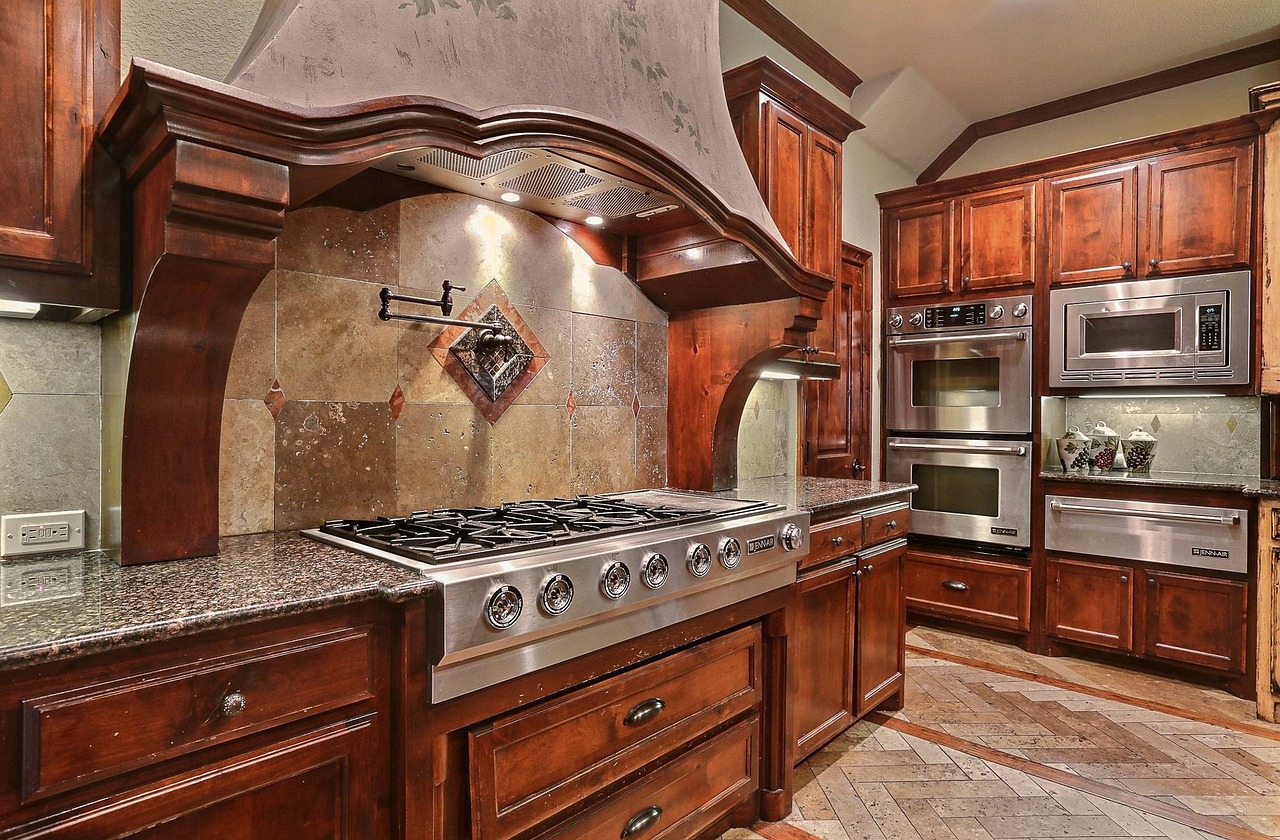
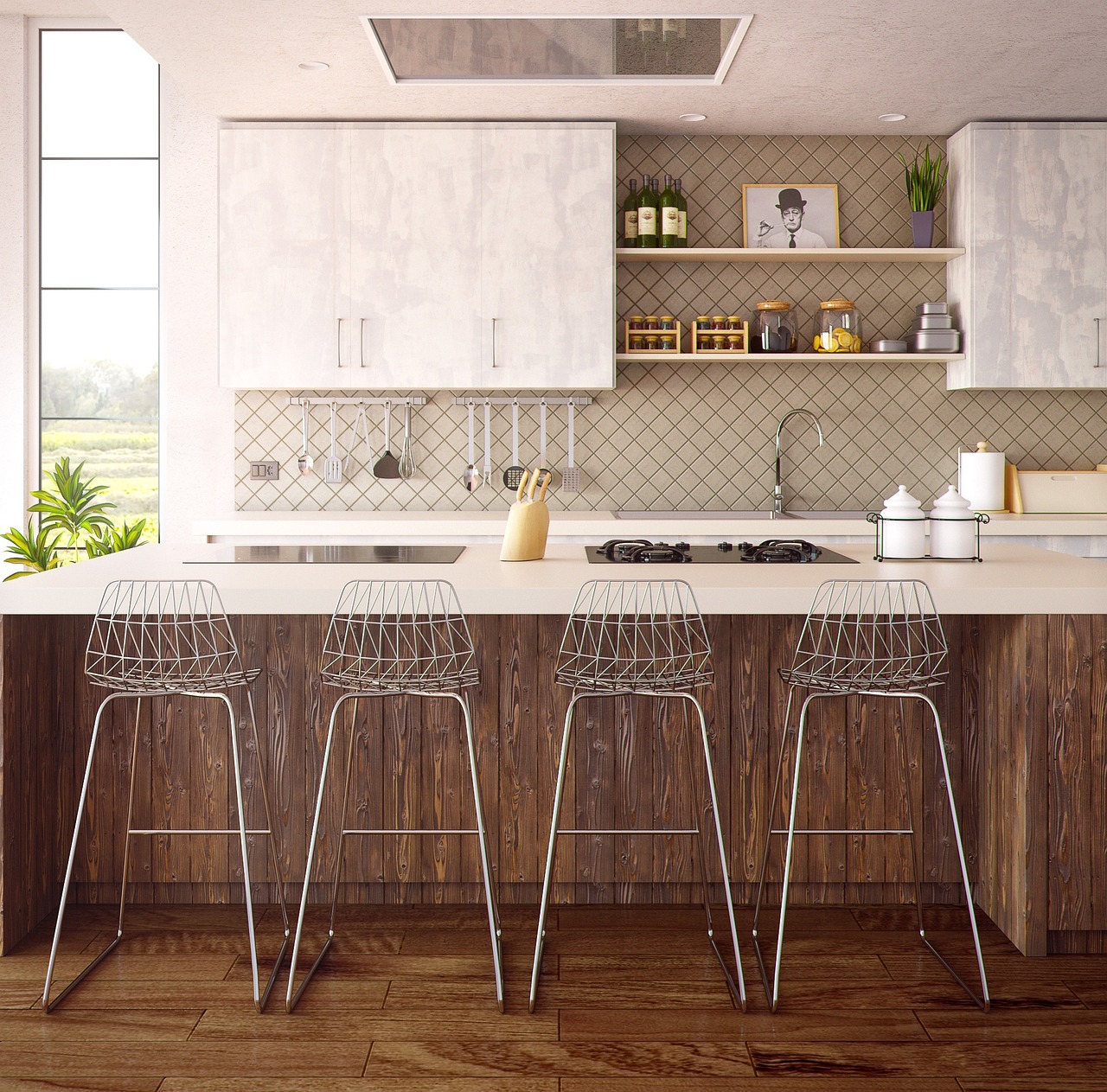
Asheville Countertop Journal is a local resource covering countertops installation in Asheville, NC. The guides below explain materials, typical costs, local considerations, and how the work is usually done.
The word custom gets used loosely in the countertop trade. A big box order with a choice of three edge profiles is still a catalogue product. A genuinely custom top starts at a specific slab, on a specific rack, in a specific yard, and every decision after that point is made against the material actually in front of you rather than a sample chip. That difference is what most homeowners are really asking about when they call around for pricing.
It matters more in this region than it does in a flat suburban market. Kitchens here span 1920s bungalows in Montford, mid century ranches in Haw Creek, and new builds out toward Arden and Fletcher, and almost none of them have square walls or level cabinet runs. A shop that fabricates to the room rather than to a drawing absorbs that. A shop that cuts to a plan and expects the room to cooperate produces the gaps that get blamed on the installer later.
It starts at the slab, not the sample
Natural stone is not a uniform product. Two granite slabs cut from the same block will share a general character and still differ in veining, background tone, and the position of any fissures. Quartzite is worse in this respect, or better depending on your taste, because the movement can shift dramatically across a single slab. Engineered stone, the quartz category that includes brands like Cambria and Caesarstone, is far more consistent by design, which is exactly why some people choose it and others find it flat.
Selecting in person means standing in front of the actual slab and deciding where the interesting part of it should land. On a large island, that is a real design decision. The most dramatic vein in the slab can run down the centre of the island, sit off to one side, or be cut out entirely by the sink hole if nobody thinks about it. Fabricators who lay out digitally will show you the cut lines overlaid on a photograph of your slab before anything is cut, and that step is the single clearest marker of a custom process.
Templating is measurement, and it is not optional
A template is a precise record of the actual space. Most shops now use a laser templating system that shoots the perimeter of the cabinet run and produces a digital file accurate to a fraction of a millimetre. Older shops still cut physical templates out of thin plywood or corrugated plastic, which works, is slower, and is arguably more forgiving on badly out of square walls because the templater is physically fitting material into the gap.
Whichever method, the room has to be ready. Base cabinets must be installed, level, and secured. The sink and faucet need to be on site so the cutout and the tap holes match the hardware rather than a generic assumption. Any appliance that sits in the countertop, a cooktop most commonly, needs its spec sheet at minimum and preferably the unit itself. Templating a kitchen that is not ready produces a top that fits a kitchen that does not exist.
The shop work
Once the template is approved, the slab goes to a saw. Larger shops run CNC bridge saws and waterjet cutters, which handle interior cutouts and radiused corners cleanly. A sink cutout on an undermount installation gets polished on its exposed edge because you will see and touch it every day, which is not true of a drop in.
Edge work is where a lot of the custom budget goes. A simple eased edge is close to free. A bullnose or ogee costs more because it is more machine time and more hand polishing. A mitered edge, the detail that makes a thirty millimetre slab look like a hundred millimetre slab, is significantly more work: two pieces are cut at forty five degrees, glued, and the joint is polished out so the veining appears to wrap the corner. Done well it is invisible. Done badly it is the first thing a visitor notices.
Seams, and why the plan matters
Slabs are finite. A run longer than about three metres will have a seam somewhere, and the only question is where. A good fabricator places seams deliberately, usually behind a sink or at an inside corner where the eye does not travel, and matches the veining across the joint so the pattern continues. A poor one places the seam wherever the cut list was most efficient. Seam placement should be discussed before fabrication, not discovered on install day.
Install day
The finished pieces arrive, get dry fit, and adjustments are made on site with a grinder and polishing pads. Shims level the top across cabinet runs that are rarely perfectly level themselves. The seam is filled with colour matched epoxy, clamped, and polished flush. Silicone goes around the perimeter where the top meets the backsplash wall.
Plumbing reconnection is a separate trade in most jobs. Fabricators cut the hole and often set the sink, but connecting the drain and supply lines is plumbing work, and on a permitted remodel it may need to be done by a licensed plumber. Clarify who is doing it before install day rather than discovering at five in the afternoon that nobody booked it.
What to ask before you sign
Ask whether you will select the physical slab or a colour. Ask whether they will show you a digital layout with the cut lines before cutting. Ask where the seams will fall. Ask whether the edge price quoted is the edge you actually want. Ask who reconnects the plumbing and who removes the old top. Those five answers separate a fabrication service from a supply and fit service, and the price difference between them is usually smaller than people expect.
Thickness, and why it changes the look more than the colour
Slabs arrive in two common thicknesses, roughly twenty millimetres and roughly thirty. The thinner one is cheaper and lighter, needs a plywood substrate under it in most applications, and reads as a more contemporary detail. The thicker one is self supporting across normal cabinet spans and reads as more substantial. Neither is better. But a quote that does not state the thickness is not a complete quote, because the same colour in the two thicknesses is a visibly different countertop.
Build up strips are the middle route. A thin slab with a laminated strip along the front edge gives the visual weight of a thick top at a lower material cost. The join is visible on close inspection if the strip is simply glued under the edge, and invisible if it is properly mitered. Ask which one is being quoted, because the words build up cover both.
Sealing, and what it does not do
Most natural stone gets an impregnating sealer, which soaks into the surface pores and slows liquid absorption. It is not a coating and it does not sit on top like a varnish. Granite in normal domestic use typically wants resealing every one to three years depending on the stone and the traffic. Marble and other calcareous stones are more porous and more reactive, and no sealer prevents an acid etch from lemon juice or wine, because etching is a chemical reaction with the stone rather than a stain sitting in it.
Engineered quartz is non porous and is not sealed at all. It is highly stain resistant and it is not heat proof, and the most common damage on a quartz top is a scorch mark from a pan set straight down off the hob. Both categories want a trivet. The difference is which failure mode you get if you forget.
Lead times worth planning around
From signed quote to installed top, three to five weeks is a normal span. Roughly one week of that is getting the templater booked, one to three weeks is fabrication depending on the shop's queue and the complexity of the edge work, and the install itself is a day. Exotic material that has to be sourced rather than pulled from local stock adds to the front of that.
The part that surprises people is that the clock does not start when you choose the stone. It starts when the kitchen is ready to template. Cabinets delayed by two weeks push the countertop by two weeks, and there is nothing the fabricator can do about it, because a template taken against cabinets that are not final is worse than no template at all.
Two shops can quote the same kitchen and land thousands apart without either of them being dishonest. The spread comes from what is counted, what is assumed, and what is quietly excluded. Once you can see the structure of a quote, comparing them stops being guesswork.
Square footage is not a fixed number
Countertops are priced by the square foot of finished surface, but shops calculate that figure differently. Some bill the net area of the finished tops. Others bill the yield, meaning the amount of slab consumed including the offcuts that cannot be used elsewhere. On a kitchen with an unusual layout, or an island with a large radius, yield billing can be twenty per cent higher than net for exactly the same visible countertop. Neither approach is wrong. They are just different, and a quote that does not say which one it uses is not comparable to one that does.
Material tier drives most of the difference
Material is usually the largest single line. Entry level granite in a commonly stocked colour sits at one end. Exotic quartzite, marble, and dramatic book matched slabs sit at the other, sometimes at four or five times the price per square foot. Engineered quartz occupies a broad middle band that varies by brand and by pattern within a brand.
The trap is that a quote may name a price group rather than a slab. Group A, Group B, and Group C tell you a budget band, not what you are getting. If you have chosen a specific slab, the quote should name it and ideally reference the slab number so there is no ambiguity later about which piece of stone was priced.
Edges, cutouts, and the detail lines
An eased or straight polished edge is generally included. Anything else is an upgrade. Bullnose, ogee, and dupont profiles carry a per linear foot charge. A mitered edge that builds up the apparent thickness carries a substantially higher one, because it is effectively fabricating a second piece and joining it invisibly.
Cutouts are usually itemised. An undermount sink cutout costs more than a drop in because the exposed edge has to be polished. Cooktop cutouts, faucet holes, soap dispenser holes, and air switch holes are often listed separately at modest amounts that add up. Radiused corners cost more than square ones. None of this is padding, it is machine and hand time, but it is worth seeing itemised so you know what you are choosing.
The lines that are often missing
Removal and disposal of the existing countertop is sometimes included and sometimes not. Plumbing disconnection and reconnection is frequently excluded, on the reasonable grounds that it is another trade. Backsplash material, if you are having one fabricated from the same slab, is separate. Sealing is normally included on natural stone, but the type and expected life of the sealer varies.
Delivery and access is the one that catches people out locally. A top that has to be carried up an exterior stair, around a switchback driveway, or through a house with a tight turn at the landing takes more people and more time. Some shops absorb this. Others add a difficult access charge once they have seen the site, which means a quote given over the phone can move after the templater visits.
Comparing two quotes properly
Put them side by side and normalise. Confirm both are quoting the same material and ideally the same slab. Confirm both are using the same square footage basis. Confirm the edge profile matches. Then check what each includes for removal, plumbing, and delivery, and add the missing items to whichever quote excluded them. A quote that looked two thousand cheaper often closes most of that gap once the excluded lines are added back.
What a low quote can legitimately mean
Not every cheap quote is hiding something. A shop with a slab already in stock that has been sitting too long may price it to move it. A shop with a gap in its schedule may discount to fill it. A remnant large enough for a small kitchen or a vanity top can be genuinely inexpensive because the material cost was already absorbed by another job.
What a low quote should not mean is a shorter process. If the saving comes from skipping the physical slab selection, skipping the digital layout, or templating a kitchen that is not ready, the saving is being paid for with risk that lands on you. Ask what is different rather than assuming the number is simply better.
Deposits, payment stages, and what they signal
A deposit at order is standard, because the shop is committing to a specific slab on your behalf and often paying the yard for it. Something in the region of half the total at order and the balance at or shortly after install is a common structure. A shop asking for the full amount up front is unusual enough to ask about. A shop asking for nothing until completion is also unusual, and generally means they are carrying the material cost themselves, which smaller shops rarely can.
What matters more than the percentage is what the deposit is attached to. A deposit that names the slab, the thickness, the edge profile, and an expected template date is a commitment. A deposit against a price group with no slab named is a placeholder, and the specifics get settled later at whatever they turn out to cost.
Remnants and small jobs
A remnant is the usable offcut left after a larger job. For a bathroom vanity top, a small bar, a laundry counter, or a fireplace hearth, a remnant is often the single best value in the trade: the material is already paid for and the shop wants the rack space back. The catch is that you take what exists, so the selection is whatever came off recent jobs rather than a catalogue.
Remnant pricing is also where quotes diverge most sharply, because some shops price remnants at a genuine discount and others price them at full rate on the grounds that the fabrication labour is identical regardless of where the stone came from. Both positions are defensible. Ask directly whether remnant stock is priced differently before assuming a saving.
Getting a quote you can actually hold someone to
A quote worth comparing names the material and ideally the slab, states the thickness, states the square footage and the basis used to calculate it, itemises the edge profile with its linear footage, lists each cutout, and says explicitly what is included for removal, plumbing, delivery, and sealing. Anything missing from that list is a place where the final invoice can legitimately differ from the estimate.
None of this requires distrust of the shop. Most fabricators will happily provide all of it, and the ones who resist itemising are usually not hiding a margin so much as working from a habit of quoting round numbers. Asking politely for the breakdown costs nothing and makes two quotes genuinely comparable for the first time.
On a countertop only replacement you deal with the fabricator directly and the question does not arise. On a full kitchen remodel it does, because the general contractor almost always has a shop they already use. Going with their choice is convenient and usually fine. Insisting on your own is sometimes right. The two routes fail in different ways and it helps to know which failure you are choosing.
What the contractor route buys you
A contractor who has run thirty kitchens with the same fabricator has a working relationship that is genuinely worth something. Scheduling is easier because the shop will fit the job in for a repeat source of work. Problems get resolved between two businesses that expect to work together again next month, rather than between two strangers each blaming the other.
Coordination is the real benefit. The countertop sits at a pinch point in the schedule: cabinets have to be in and level before templating, and templating to install is typically one to three weeks, during which the kitchen has no working sink. A contractor managing that sequence has an incentive to get the template booked the day the cabinets are signed off. Left to coordinate it yourself, that handoff is where weeks get lost.
What it can cost you
The contractor is usually marking the countertop up, which is normal and is how the trade works, but it means you may not see the fabricator's actual price. More importantly, the contractor's preferred shop is preferred for the contractor's reasons, which are reliability and easy scheduling, not necessarily the widest slab selection or the best mitered edge work.
If you have chosen an unusual quartzite, or you want a waterfall island with book matched veining, the shop that is excellent at turning around straightforward granite kitchens quickly may not be the shop that does that particular work best. That is not a criticism of them. It is a specialisation mismatch.
When to bring your own fabricator
Bring your own when the countertop is the feature of the room rather than a surface in it. Dramatic natural stone, book matching, a mitered waterfall, an integrated drainboard, or a very large single span island all reward a shop chosen specifically for that work. Bring your own if you have already fallen in love with a particular slab at a particular yard, because some fabricators only work with material from their own suppliers.
If you do, tell the contractor early. A fabricator introduced at the start is a subcontractor to be scheduled. A fabricator introduced after cabinets are ordered is a disruption, and you will get a less cooperative response for entirely understandable reasons.
The questions that apply either way
Ask who holds the contract for the countertop. If it is the contractor, warranty claims go through them, which is simpler for you. If it is you directly, you have a direct relationship with the shop but you are also the one coordinating between trades when something does not line up.
Ask who is responsible if the template is taken against cabinets that later move. Ask who reconnects the plumbing and whether that person is licensed for the work if the job is permitted. Ask what happens if a slab breaks in the shop, which is uncommon but not rare, and how much that delays the schedule.
Insurance and licensing
Whoever you contract with, confirm they carry general liability insurance and workers compensation cover for anyone on your site. Heavy stone and powered saws in an occupied house is a genuine risk category, not a paperwork formality.
Silica exposure is the other one worth knowing about. Cutting and polishing engineered stone releases respirable crystalline silica, and the health consequences for fabricators who work without proper wet cutting and respiratory protection are serious and well documented. A shop that runs wet saws, uses dust extraction, and can talk sensibly about it is telling you something about how it operates generally.
A reasonable default
For most straightforward kitchens, take the contractor's fabricator and spend your attention on the slab selection instead. Ask to visit the yard, choose the physical slab, and ask to see the digital layout before cutting. Those three requests get you most of the benefit of a custom process regardless of which shop is doing the work.
Reading a shop rather than a review score
Online ratings for countertop shops are noisy, because the single most common complaint is schedule slip and schedule slip is frequently caused by the cabinet trade rather than the fabricator. A shop with a run of one star reviews all describing delays may be a badly run shop, or may be the shop that a busy local builder keeps promising unrealistic dates on behalf of.
More informative is what happens when you visit. Is there a slab yard or showroom where you can see full slabs standing rather than sample chips. Do they offer to lay out your cut lines digitally. Do they answer a question about seam placement with a specific answer about your kitchen or a general reassurance. A shop that talks about your layout within five minutes of meeting you is a shop that fabricates rather than supplies.
The handoffs where jobs actually go wrong
Almost every countertop problem traces to a handoff rather than to the stone. Cabinets not fully secured when the templater arrives. A sink delivered after template day so the cutout was made to a spec sheet that did not match the unit. A cooktop swapped for a different model after fabrication started. Plumbing not booked for the afternoon of install. None of these are fabrication faults and all of them land as countertop delays.
The practical defence is a short written sequence agreed with whoever is coordinating: cabinets complete by a date, template on a date, sink and faucet on site before that date, install on a date, plumber booked for the same afternoon. Five lines. It resolves most of the arguments before they happen because it makes the dependencies visible to everyone at once.
What a good shop will tell you that you did not ask
Unprompted, a good fabricator will point out that your island span needs support brackets, that the run along the window wall will need a seam and where they would put it, that the stone you have chosen is more porous than you may expect, or that the overhang you have drawn will not take a bar stool without a bracket underneath. Those observations cost them nothing and save you a complaint later.
A shop that agrees to everything without comment is either exceptionally accommodating or is not looking closely. The countertop trade has enough physical constraints that any real kitchen has at least one detail worth flagging, and hearing that detail raised before you sign is a better signal than any review.