Home / Remnants: When the Offcut Is the Right Material
Buying a Remnant Instead of a Full Slab
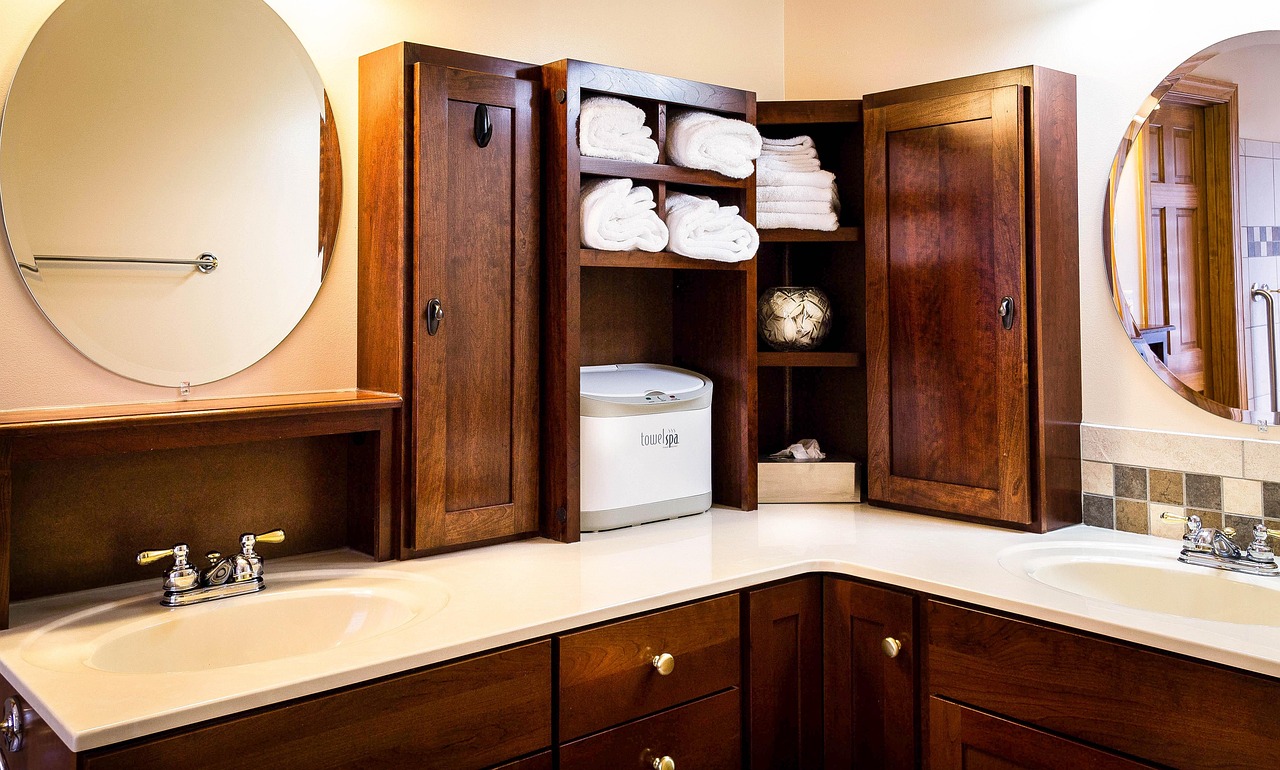
Every countertop job leaves offcuts. Large usable pieces get racked as remnants and sold separately, and for the right project they are the best value in the business.
What fits on a remnant
Bathroom vanity tops are the classic use, single or double. Also: a laundry counter, a small wet bar, a fireplace hearth, a windowsill, a bench top in a mudroom, and occasionally a very small kitchen if the layout is simple and the piece is large enough. Anything needing more than about two square metres in one continuous shape is usually out of remnant territory.
What you give up
Selection. You are choosing from what happens to be on the rack, which reflects whatever jobs the shop ran recently. If you have a specific colour in mind you may wait months for one to appear, or never. The right posture is to arrive with a rough idea and an open mind rather than a fixed target.
You also give up the ability to match later. If you remodel the second bathroom in two years and want the same stone, that remnant is gone and the block it came from may no longer be in production.
What you do not give up
Fabrication quality is identical. The same saw, the same edge profiles, the same polishing, the same undermount sink cutout. A remnant vanity top is not a lower grade product, it is the same product from a smaller piece of stone.
Pricing
Practice varies. Some shops discount remnants substantially because the material is already paid for and the rack space is worth more than the stone. Others charge close to standard rates on the grounds that the labour is unchanged, which is a fair point since fabrication is most of the cost on a small piece anyway.
Ask directly whether remnant stock is priced differently, and ask what is currently on the rack before assuming nothing suitable exists. Yards turn over faster than people expect. More on how selection works in Choosing a Slab in Person Instead of From a Sample.
How to shop the remnant rack
Remnant inventory turns over unpredictably, so the approach is different from choosing a full slab. Call ahead and ask whether they hold remnant stock and how much. Ask whether they keep a list, since some yards photograph and catalogue theirs while others simply have a rack you have to walk.
Bring your dimensions written down, including the depth you need and any cutout. A piece that looks large enough on a rack can be an awkward shape, and knowing your minimum rectangle saves everybody time. Bring the sink if it is small enough to carry, or its dimensions if not, because a vanity top remnant that cannot take your chosen basin is no use.
What to check on a remnant specifically
Remnants have already been through a saw, so at least one edge is a cut edge rather than a factory one. Check the cut edges for chips, which are usually irrelevant because they will be cut away, but occasionally indicate the piece was damaged in handling.
Check the whole face in good light for a hairline crack. Remnants sometimes exist precisely because a slab cracked and the undamaged portion was salvaged, which is entirely legitimate as long as the piece you are buying is sound. Ask directly whether the remnant came from a breakage, and where the break was.
Check the thickness, because remnant racks mix twenty and thirty millimetre stock and a vanity top in twenty millimetre may want a substrate you had not budgeted for.
Combining remnants across a project
A common and effective approach in a whole house project is to use a full slab for the kitchen and remnants for everything else, accepting that the bathrooms will not match the kitchen. Deliberately choosing a complementary rather than matching stone for secondary spaces is a normal design decision, not a compromise, and it removes the constraint that makes remnant shopping frustrating.
If you do want the bathrooms to match the kitchen, the move is to buy the offcut from your own kitchen job. Ask the fabricator to hold your offcuts rather than racking them, and price the vanity tops from your own material at the same time as the kitchen. This is usually the cheapest matched option available and it has to be arranged before the kitchen is cut.
The limits
Remnants do not work for anything needing a long continuous run, anything needing two matched pieces, or anything with a demanding pattern requirement. They work extremely well for the small secondary surfaces that otherwise get skipped for budget reasons, and that is precisely where they deliver the most value.
Timing a remnant purchase
Remnant stock is a function of what the yard's fabricator customers have been cutting, which means it fluctuates with the building cycle rather than with anything you can predict. There is no reliable good season. What there is, is a reliable relationship: a yard that knows you are looking for a particular colour in a particular size will often call when something suitable comes off a job.
That only works if you are not in a hurry. If the vanity top has to be in within three weeks, buy a full slab or accept whatever is on the rack today. If the second bathroom is a project for later in the year, leaving your dimensions and a phone number with the yard costs nothing and occasionally produces exactly the piece you wanted at a fraction of the price. It is one of the few parts of this trade where patience is directly rewarded.
Because the small secondary surfaces are the first things a Weaverville bathroom or laundry budget drops, asheville countertops installation corner keeps returning to the point that vanity top fabrication and the undermount sink cutout are worth pricing alongside the kitchen rather than a year after it.
The summary is straightforward. Remnants are the same stone, fabricated the same way, from a smaller piece, and for vanities and other small surfaces they are frequently the best value available. What you trade is selection and the ability to match again later. Go with dimensions in hand and an open mind about colour, check the cut edges and the face for damage, ask directly how remnants are priced, and if you are not in a rush, leave your requirements with the yard and let them call you.