Home / Edge Profiles, Thickness, and Surface Finish
The Detailing Choices That Change How a Top Reads
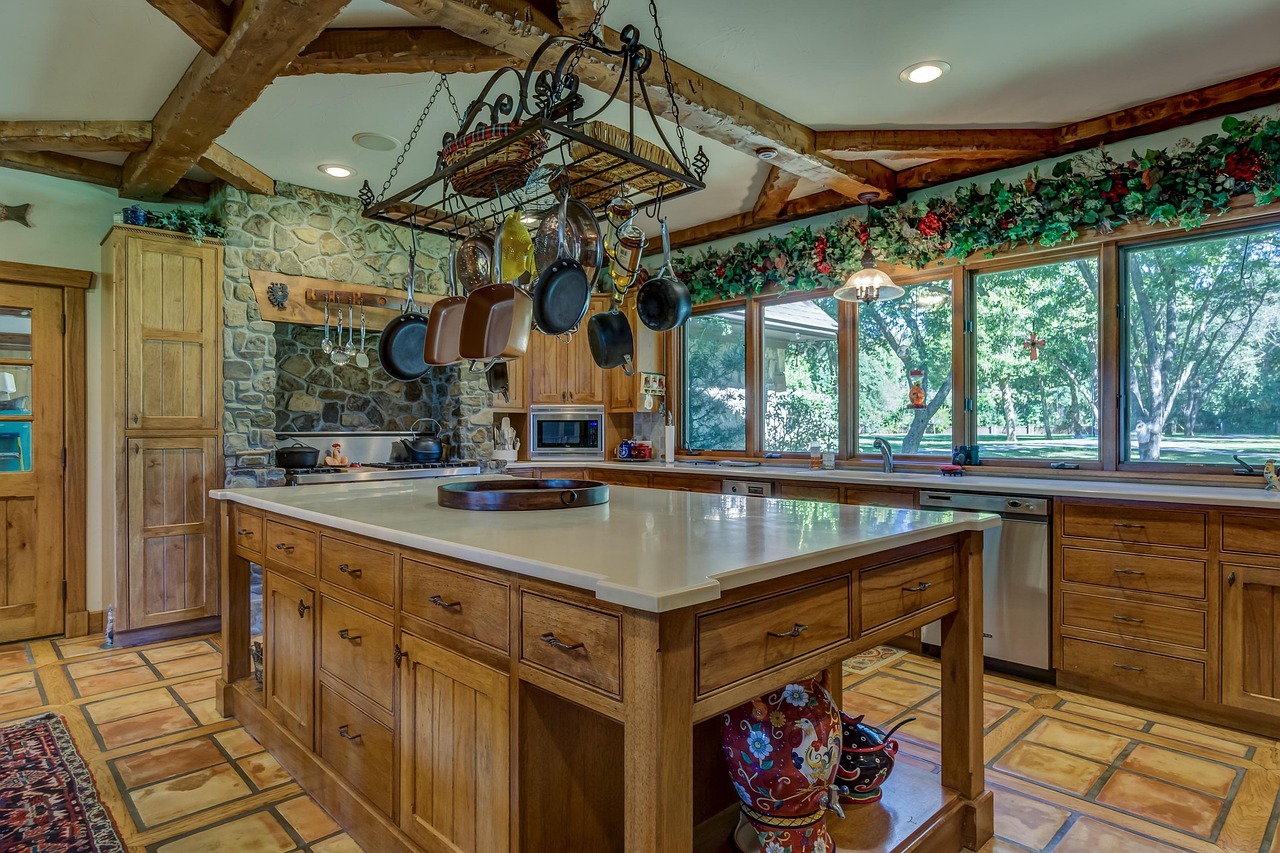
Material choice gets all the attention and detailing decides how the finished kitchen actually reads. Two tops cut from the same slab, one with an eased edge in twenty millimetre stone and one with a mitered edge in thirty, look like different products at different prices.
The edge profiles in practice
Eased is a barely rounded square edge. It is the default, it is usually included in the base price, and it suits almost everything. Bullnose rounds the full edge into a half circle, reads as softer and more traditional, and is easier on hips in a tight kitchen. Half bullnose rounds only the top half. Ogee is a double curve, decorative and firmly traditional. Dupont is a straight face with a curve at the top, sitting between the two.
Mitered is the outlier because it is not a profile so much as a construction. Two pieces are cut at forty five degrees and joined so the edge appears to be solid stone of whatever thickness you chose. It is the detail behind most contemporary thick edge kitchens and it costs meaningfully more.
Thickness
Twenty millimetre stone is lighter, cheaper, usually needs a substrate, and reads contemporary. Thirty millimetre is self supporting over normal spans and reads substantial. The choice interacts with the edge: a mitered edge on twenty millimetre stone can be built up to any apparent thickness you like, which is how sixty and one hundred millimetre looks get achieved without the weight or cost of solid stone.
Surface finish
Polished is the familiar high gloss. It makes colour and depth pop, it is the easiest to wipe clean, and it shows water spots and fingerprints most readily. Honed is matte, achieved by stopping the polishing sequence early. It reads soft and modern, hides water marks well, and on darker stones shows oils and fingerprints more than polished does. Leathered is textured, with a slight ripple that follows the stone's own structure, and it hides almost everything at the cost of being slightly harder to wipe down.
Choosing between them
A useful test is to decide what you want the counter to hide. A busy family kitchen in a dark stone is more comfortable leathered or honed. A kitchen where the stone is the feature and gets wiped constantly is usually better polished. There is no durability difference of any consequence between the three on granite or quartzite. asheville countertops installation corner
How edge choice interacts with the room
An edge profile is read at close range and from a low angle, which is why it matters more in small kitchens than in large ones. In a galley where you pass within a few centimetres of the counter constantly, a hard eased edge is felt as well as seen, and a half bullnose is noticeably more comfortable against the hip. In a large open kitchen where the counter is mostly viewed from across the room, the profile is a silhouette and the choice becomes almost purely visual.
Traditional cabinetry with raised panel doors and applied moulding generally carries an ogee or a dupont edge comfortably, because the vocabulary of the room already includes curves and shadow lines. Flat slab doors with no hardware usually want an eased or mitered edge, since anything decorative reads as borrowed from a different kitchen.
The practical consequences of each profile
Eased edges are the most robust because there is the least material projecting to chip. Bullnose edges shed water away from the cabinet front slightly better, which is a genuine if minor advantage at a sink run. Ogee and other decorative profiles have thin projecting sections that are the most vulnerable to a chip from a dropped pan, and are also the fiddliest to clean because the recesses hold residue.
Mitered edges have one specific vulnerability, which is the glue line at the bottom of the returned face where it meets the cabinet. If silicone is not run there, water tracking down the face can eventually find the joint. Any competent installer seals it, but it is worth a glance during the final walkthrough.
Matching the backsplash
If you are having a backsplash fabricated from the same slab, its top edge needs a profile decision too. A four inch splash with a simple eased top is the traditional default. A full height splash usually has an eased edge where it meets the upper cabinets, or dies into them entirely with no exposed edge at all.
Full height splashes are also where the finish choice gets tested, because a polished full height panel behind a hob reflects the room back at you and shows grease more readily than the counter does. A honed splash with a polished counter is an unusual combination that works surprisingly well for exactly this reason.
Seeing the options before choosing
Most fabricators keep a profile board, a length of stone with each available edge machined along a section of it. Handle it. Run a finger along each. The difference between a half bullnose and a full bullnose is difficult to picture and immediately obvious to the touch.
Ask to see the profile board in the stone you have actually chosen if they have one, because a profile that reads elegantly in a pale uniform quartz can look heavy in a dark heavily veined granite where the curve catches the veining at an angle.
Deciding without overthinking it
If you are stuck, default to an eased edge in a polished finish. It suits nearly every cabinet style, it is included in most base prices, it is the most durable option, and it is the one nobody ever regrets. Upgrade from there only where you have a specific reason: a mitered edge because you want visual weight, a bullnose because the kitchen is tight and you will brush against it, honed or leathered because the stone is dark and the kitchen is busy. Reasons produce good choices here. Browsing produces expensive ones.
Mixing profiles within one kitchen
There is no rule against using different edges on different surfaces, and in some kitchens it is the better answer. A perimeter run with a simple eased edge alongside an island with a mitered edge reads as a deliberate hierarchy, with the island as the feature and the working counters as background. The reverse, a decorative perimeter with a plain island, almost never works.
Where mixing goes wrong is within a single visual plane. Two adjoining runs at the same height with different profiles reads as a mistake rather than a decision, because the eye follows the line and sees it change for no apparent reason. The safe principle is that a profile change should coincide with a level change, a material change, or a physical separation.