Home / Honed, Leathered, and Polished Compared
Choosing a Surface Finish You Will Live With
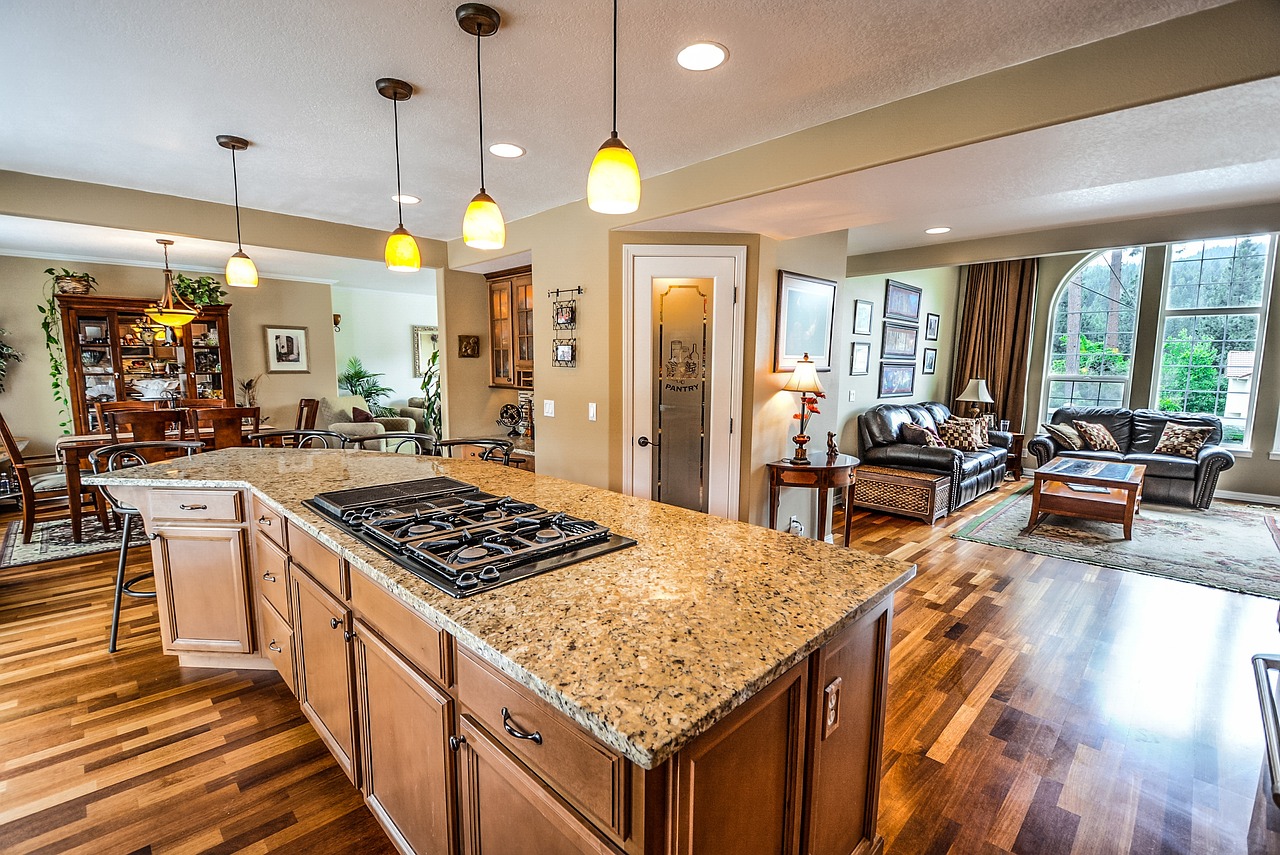
Finish is chosen last and lived with daily. The practical difference between the three common options is less about durability, which is broadly the same, and more about what each one shows.
Polished
The stone is taken through progressively finer abrasives to a high gloss. It maximises colour depth and pattern contrast, so a stone with dramatic veining looks its most dramatic polished. It is the easiest to wipe, and the least porous of the three because the polishing closes the surface.
It shows water spots, and in strong daylight it shows every fingerprint on a dark stone. It also reflects, which in a kitchen with downlights means visible bright spots on the counter.
Honed
The same process stopped early, leaving a flat matte surface. It reads soft and contemporary and it kills reflections entirely. Colour is muted compared to polished, which on some stones is an improvement and on others loses what you liked about it.
Honed surfaces are slightly more open, so sealing matters more and a spill left overnight is more likely to mark. On dark honed stone, skin oils leave visible marks that wipe off but reappear constantly in a busy kitchen.
Leathered
A brushed texture that follows the stone's own hardness variation, leaving a subtle undulation you can feel. It hides fingerprints, water spots, and crumbs better than either alternative, which makes it the pragmatic choice for a family kitchen in a dark stone.
It is marginally harder to wipe completely clean because the texture holds a little residue, and it is not offered on every stone.
How to choose
Ask the yard for samples of your chosen stone in more than one finish and keep them on the counter for a week. Handle them, spill on them, wipe them. A week of ordinary use answers the question better than any description, including this one. Return to Edge Profiles, Thickness, and Surface Finish for how finish interacts with the edge profile.
How finish affects sealing and maintenance
Polishing partially closes the surface of natural stone, which is why a polished granite absorbs less than the same granite honed. A honed surface has more open pore structure exposed, so it takes sealer more readily, benefits from it more, and generally wants resealing somewhat more often.
Leathered sits between the two in absorbency and is the most forgiving in appearance, because the texture disguises the slight darkening that a spill can leave before it is wiped. In practice all three want the same routine: wipe spills promptly, use a pH neutral cleaner rather than anything acidic or abrasive, and reseal natural stone when water stops beading.
The finish and the stone are not independent
Some stones only come in certain finishes, and some are transformed by one. A dark granite that looks flat and unremarkable polished can become genuinely beautiful leathered, because the texture catches light across the crystal structure. A pale quartzite with subtle veining often loses almost all of its character honed, since the veining depended on the depth that polishing provided.
Engineered quartz is manufactured in a specific finish and cannot generally be refinished afterwards. Natural stone can be, at least in principle: a polished granite can be honed on site by a specialist, and a honed one can be polished. Both are messy, expensive jobs and neither is a routine option, so treat the finish as permanent when choosing.
Consistency across pieces
Finish is applied in the shop and should be identical across every piece in your kitchen, including the polished edge of an undermount sink cutout and the returned face of a mitered edge. A slight sheen difference between the top surface and the edge is a common minor defect on rushed work and is visible in raking light.
It is worth checking at the final walkthrough. Stand at the end of the run and look along it toward a window. Differences in sheen that are invisible from directly above show up immediately at a low angle.
Living with the choice
The honest summary is that none of the three is meaningfully more durable, none is meaningfully harder to keep clean, and the entire decision is about which visual annoyance you would rather have. Polished shows water spots and fingerprints. Honed shows oils on dark stone and marks more readily from spills. Leathered shows almost nothing and holds a little residue in its texture.
Pick the annoyance you care least about, in the stone you have actually chosen, having looked at samples in your own kitchen light for a few days. That process produces the right answer far more reliably than any general rule, including everything written above.
Testing samples properly at home
Ask for offcut samples in the finishes you are considering, in the actual stone. Most yards and fabricators will provide them, and a sample large enough to be useful is roughly the size of a paperback rather than a business card.
Leave them on the counter for a week and use them. Set a mug of coffee down and leave the ring. Splash oil on one corner. Put a wet glass on it and let it dry. Cut a lemon and leave a drop on it for an hour, which on marble will etch and on granite or quartz will not. Wipe each one with the cleaner you actually use.
At the end of the week, look at all three in morning light and again under the evening lighting you will really cook by. That week tells you which finish you can live with in a way that no amount of showroom comparison can, and it is the single cheapest piece of research available in the whole project.
The light in a West Asheville bungalow with one north facing window is nothing like the light in a new build out toward Long Shoals Road, and that difference settles more finish arguments than any showroom ever will, which is why asheville countertops installation corner treats finish and sealing as decisions made in the house rather than at the fabrication shop.
All three finishes will outlast the kitchen. The decision is genuinely about appearance and about which small daily annoyance you would rather not have, and the only reliable way to answer it is to live with samples of your own stone for a week in your own light. Ask for offcuts large enough to be useful, abuse them a little, and look at them at both ends of the day. The finish you still like on day seven is the right one.